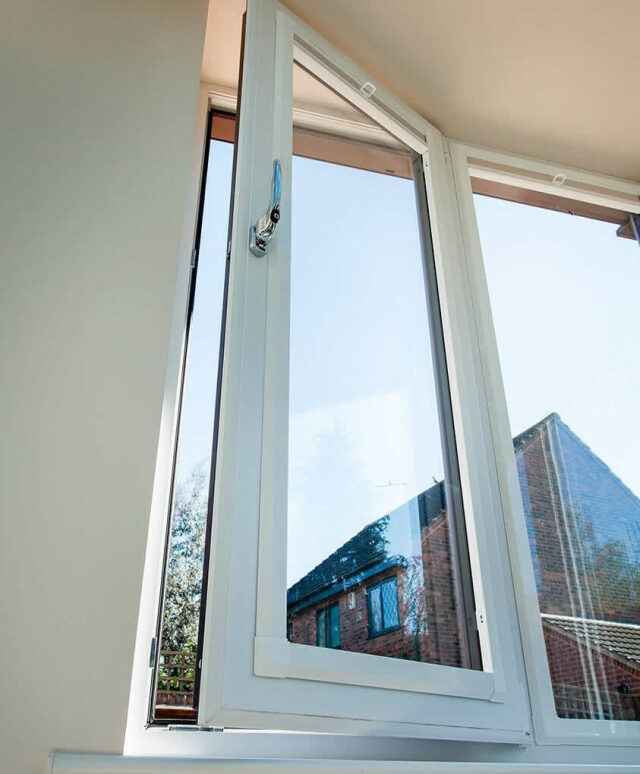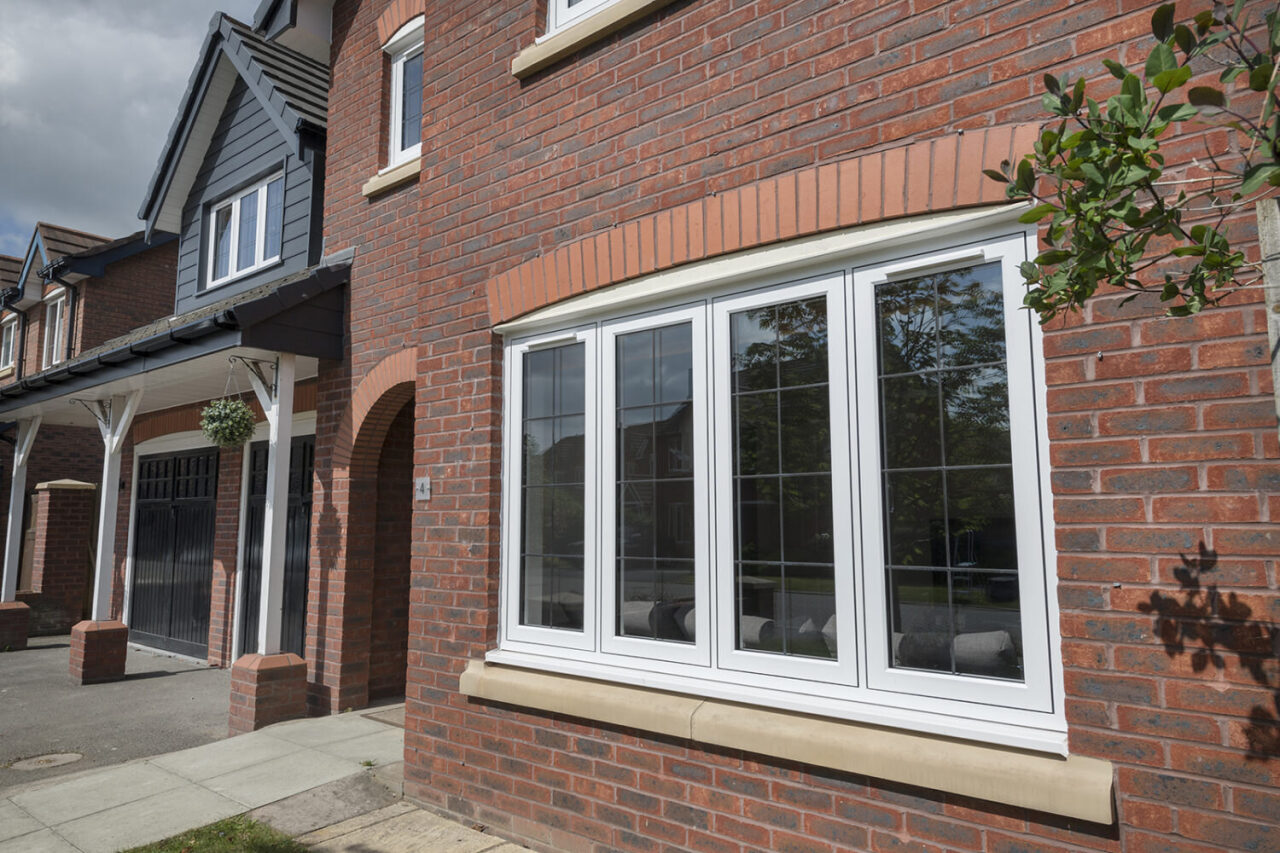
We make windows and doors in both materials, so we have no reason to push one over the other. Each has strengths, and the honest answer to "which is better?" is "for what?".
Cost
PVCu is the more economical material. The profile is extruded rather than machined and powder coated, the frames are welded rather than mechanically jointed, and white PVCu needs no finishing at all. For a whole-house window replacement the difference is significant, which is why the great majority of replacement windows in the UK are PVCu. Aluminium costs more, but the gap has narrowed and for a single large door it is often a smaller part of the project budget than people expect.
Strength and size
Aluminium is far stronger than PVCu for a given section size. That matters when an opening is large: a sliding door sash on the Smart Visoglide Plus can weigh 250 kg and stand 2.5 m tall, and a Visofold bifold panel can be 1.2 m wide and 2.5 m high. PVCu carries big panes too, with steel reinforcement inside the chambers, but the frames grow deeper as the panes grow, and above a certain size aluminium is simply the right engineering choice. For standard windows and patio doors PVCu is more than strong enough.
Sightlines
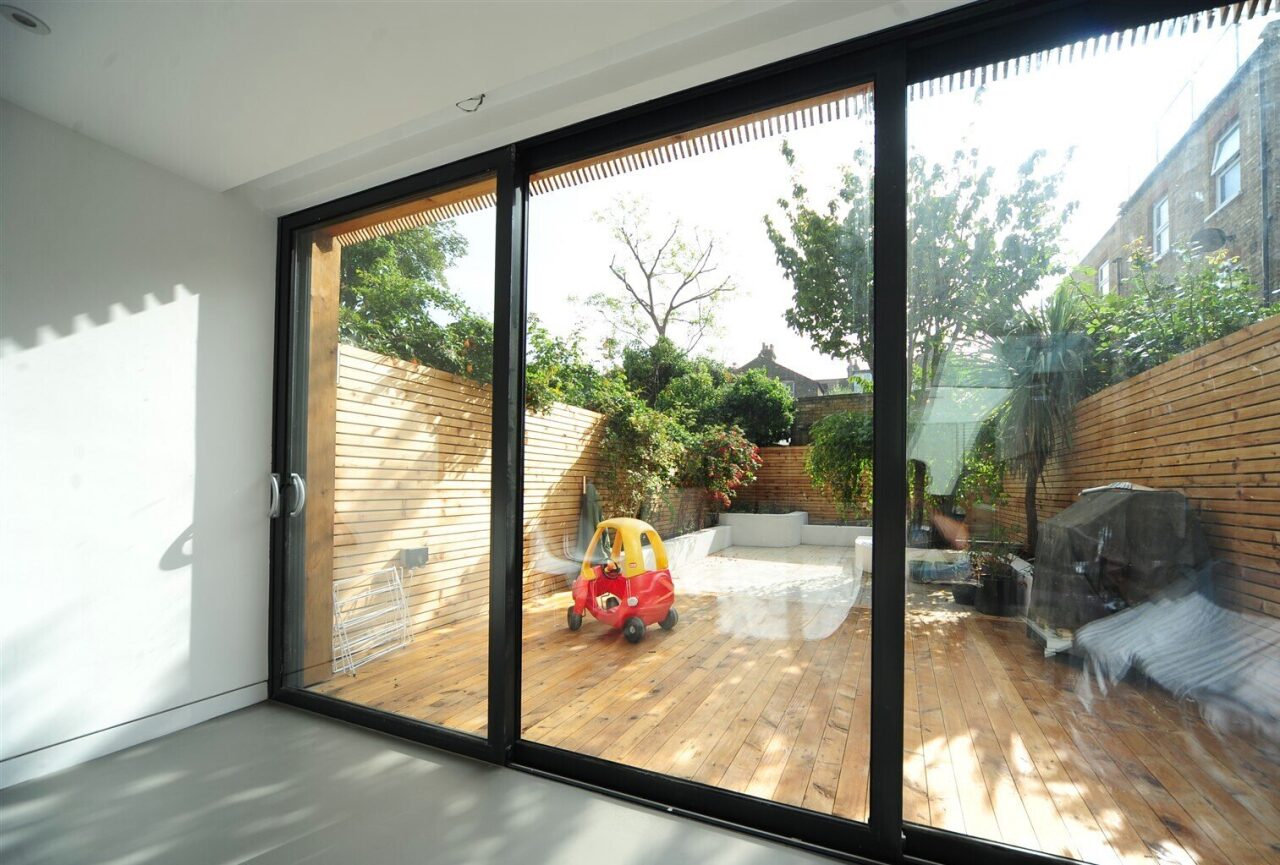
How much frame do you see?
Because it is stronger, aluminium can be slimmer. On a sliding door the two sashes meet on an interlock that is 83 mm wide on the Visoglide Plus; on a PVCu patio door the equivalent is wider. On windows the difference is less dramatic, and modern PVCu systems such as the VEKA M70 and Imagine vertical slider have been designed to keep sightlines slim. If the look you want is the minimal, contemporary one, with glass that appears to float in the wall, aluminium is the material to choose.
Thermal performance
PVCu is a poor conductor of heat, so a multi-chamber PVCu frame insulates well by nature: the M70 reaches a U-value of 1.2 W/m²K double glazed and 0.86 W/m²K triple glazed. Aluminium conducts heat readily, so an aluminium frame must be thermally broken, with a polyamide strip separating the inside and outside faces. Done well, as on the Visofold and Visoglide, the result is fully Building Regulations compliant (1.4 W/m²K, or 1.1 W/m²K on Visoglide Plus upgrade profiles), but for windows a PVCu frame will usually post the lower figure at a lower price. In practice the glass unit matters as much as the frame; ask about low-E and argon-filled units whichever material you choose.
Colour and finish
Aluminium is powder coated after fabrication in any RAL colour, matt, satin or gloss, with inside and outside faces in different colours if you wish. The finish is hard, even and long lasting. PVCu is either white through the material or covered in a foil from the systems house's range: the VEKA Variations range includes smooth colours such as Anthracite Grey and Chartwell Green and woodgrains such as Golden Oak and Rosewood. Foils are also available in dual colour. Woodgrain is a PVCu strength; aluminium is rarely finished to imitate timber.
Maintenance and lifespan
Neither material needs painting. Both are washed with soapy water and the hardware oiled occasionally. VEKA quote an expected lifespan of 35 years for the M70 profile, and powder-coated aluminium is routinely specified on commercial buildings for its durability. Both are recyclable at end of life.
Security
Every system we fabricate, in either material, is tested to PAS 24, so security is not a reason to choose one over the other. What matters is that the frame is made to the tested specification with the approved hardware, which is why we fabricate to the systems house's specification rather than substituting parts.
Our usual advice
- Replacement windows: PVCu (VEKA M70), unless a contemporary aluminium look is the point of the project.
- Sash windows on period houses: PVCu (VEKA Imagine vertical slider) for its period detailing.
- Patio door on a budget: PVCu (VEKA Imagine patio door).
- Bifolding doors: aluminium (Smart Visofold).
- Large sliding doors, slimmest frames: aluminium (Smart Visoglide).
If you are unsure, send us the opening sizes and a photograph and we will recommend, and quote, both options where both are sensible.
Related questions
Should I choose PVCu or aluminium?
Both are good materials and we make both. PVCu is the more economical choice, has excellent thermal performance from its multi-chamber frame, and suits most houses in white, colour or woodgrain. Aluminium is stronger, so it carries larger panes on slimmer frames, and it is powder coated in any RAL colour. For windows and standard patio doors most homeowners choose PVCu; for bifolding and large sliding doors aluminium is usually the better engineering choice. Our guide on PVCu or aluminium goes into more detail.
Can I have a different colour inside and outside?
Yes. Dual colour is available on the VEKA PVCu systems (a woodgrain or colour foil outside with white inside is the usual request) and on the Smart aluminium systems, where inside and outside faces can be powder coated in different RAL colours. Tell us both colours when you ask for a quotation.
How do I look after PVCu and aluminium frames?
Very little is needed. Wash the frames with warm soapy water two or three times a year, keep drainage slots clear of debris, and lightly oil moving hardware once a year. Never use abrasive cleaners or solvents. Neither material needs painting or staining.
What colours are aluminium doors available in?
Aluminium is powder coated after fabrication, so the choice is the RAL colour range in matt, satin or gloss. Anthracite Grey (RAL 7016) matt is the most popular, followed by black and lighter greys. Dual colour, with a different colour inside and out, is available. Ask for a colour sample before you decide; colours look different in daylight.
Products mentioned
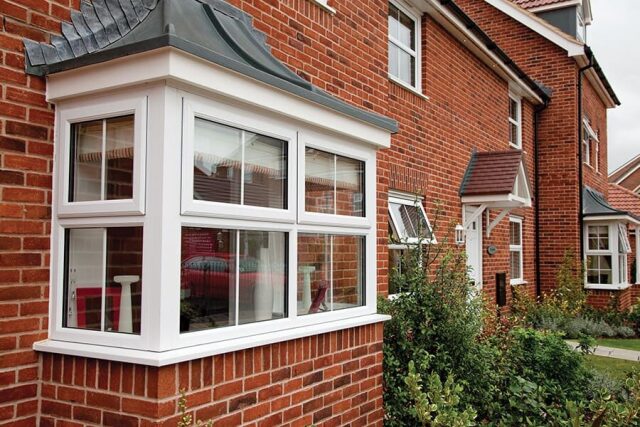
VEKA M70 PVCu Windows
A five-chamber PVCu window system, made to measure in Pyle, with PAS 24 security as standard.
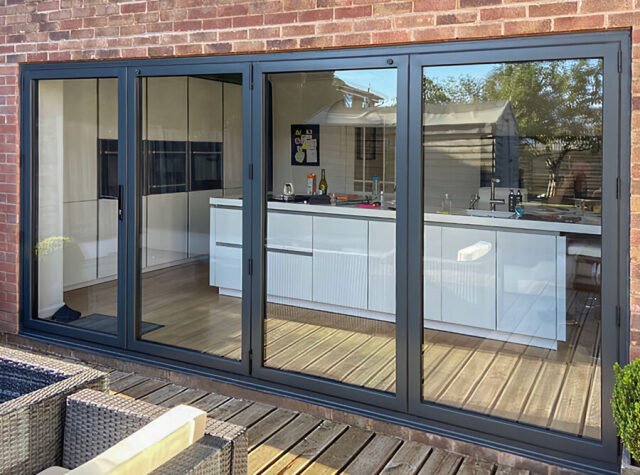
Visofold Aluminium Bifold Doors
Thermally broken aluminium bifolds that fold an entire wall away, fabricated in Pyle on the Smart Visofold system.
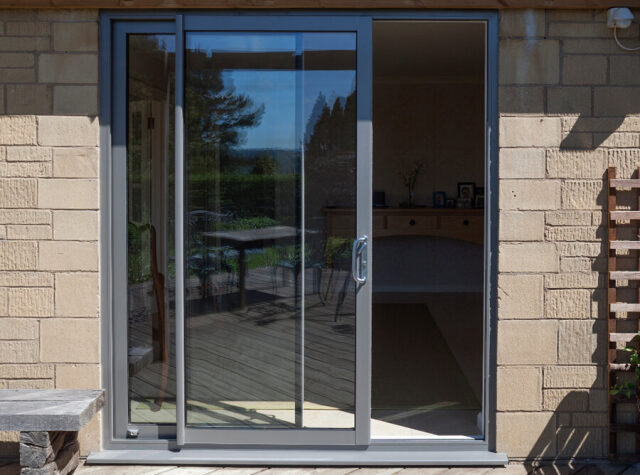
Visoglide Aluminium Sliding Doors
Slimline aluminium sliding doors with an 83 mm interlock, panels to 250 kg, and a view that stays open when the door is shut.
Quote both, decide later
Send us your opening sizes and we will quote PVCu and aluminium where both make sense.