Both doors do the same job, opening a wall to the garden, in different ways. The choice comes down to a few practical questions.
How often will the door be open?
Bifolding doors are at their best fully open, when the panels stack to the side and the room and the garden become one space. Sliding doors are at their best closed, when large panes on slim frames give an almost uninterrupted view. In a Welsh climate a door spends most of the year shut, which is the strongest argument for a slider. If the point of the project is summer living with the wall gone, it is the strongest argument for a bifold.
How wide is the opening?
Bifold panels are limited to 1200 mm wide on the Smart Visofold, so a 3 m opening is typically three panels and a 5 m opening five or more, stacking to one or both sides. Sliding panels can be much larger: the Visoglide Plus carries sashes up to 2.5 m high and 250 kg, so a 5 m opening can be two or three panels. Fewer, bigger panels means fewer vertical frame lines.
Clear opening
What is left when the door is open?
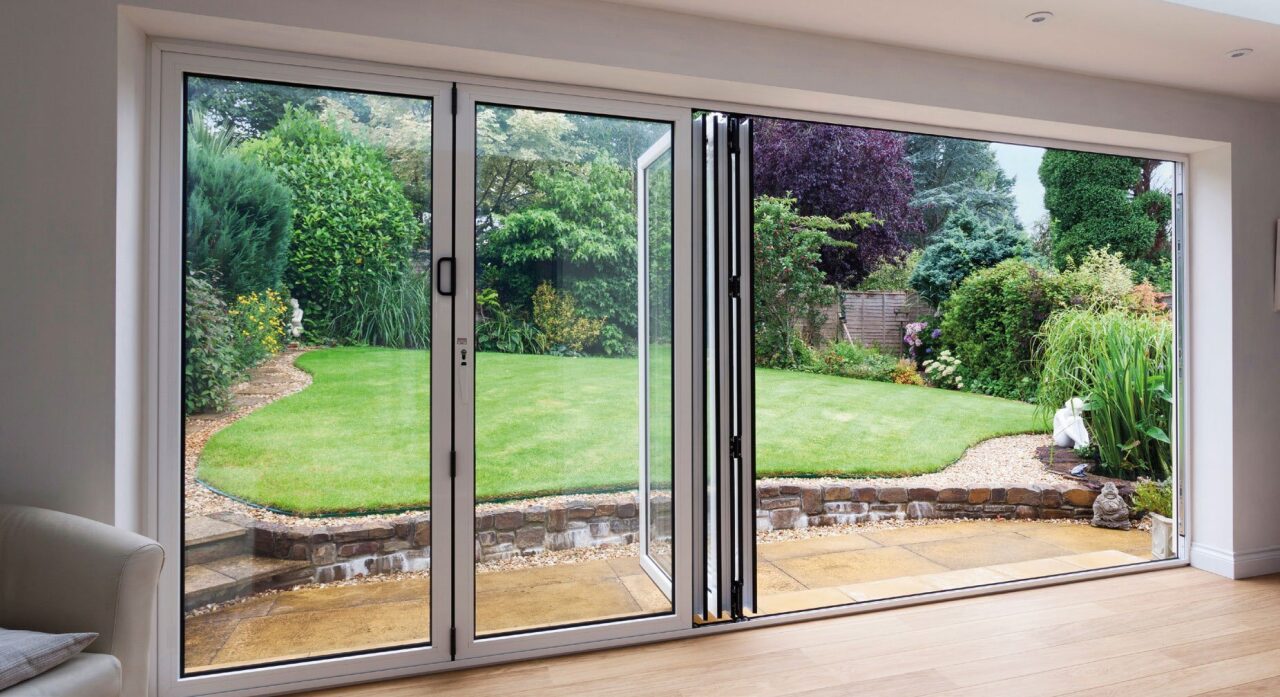
A bifold clears almost the whole width, less the stack of folded panels at one or both ends (allow roughly 120 to 150 mm per panel). A two-panel sliding door clears half the opening; a three-panel door with two sliders clears two thirds. If you need to move furniture, wheelbarrows or a crowd through the opening, a bifold wins. If you want a large, calm expanse of glass, a slider wins.
Everyday access
Ask for a traffic door on a bifold if you will use it several times a day: with an odd number of panels, one opens as a normal door without folding the run. A sliding door is inherently easy for daily use; one leaf slides, the rest stays put.
Thresholds and weather
Both systems offer rebated thresholds for exposed positions and low or level thresholds for step-free access. A sliding door has fewer joints in its cill and, in lift-and-slide form, presses onto its seals when closed, which makes it the more weather-tight choice on a windward elevation. Bifolds seal well with a rebated threshold; a level threshold trades some weather performance for accessibility, so use it in sheltered positions.
Thermal performance
Frame for frame the two are similar: 1.4 W/m²K on the Visofold with a 1.0 centre-pane unit, and 1.4 W/m²K on the Visoglide Plus, or 1.1 W/m²K with its upgrade profiles. Because a slider has fewer frames and more glass, the whole-door figure tends to favour it slightly. Both are Document L compliant.
Cost
For the same opening a bifold usually has more panels, more hinges and more hardware, so it usually costs more than a sliding door. The PVCu VEKA Imagine patio door is the most economical option of all if the opening suits two, three or four panes and a budget is the priority.
Our usual advice
- Wide opening, summer living, moving things in and out: bifold.
- View, minimal frame, closed most of the year: sliding.
- Standard opening, best value: PVCu patio door.
Send us the opening width and height with a photograph and we will suggest a configuration and quote it.
Related questions
Bifold or sliding doors: which should I choose?
Bifolds open up almost the whole width of the opening, which is ideal if you want the room and garden to become one space in summer. Sliding doors keep larger panes and slimmer frames, so the view is better when closed, which is most of the year in Wales. Sliding doors also avoid a stack of folded panels. If the opening is wide and tall, or you want the biggest glass, choose sliding; if you want the widest clear opening, choose bifold. Our guide on bifold or sliding doors compares them in detail.
How many panels will my bifold door need?
Panel width on the Smart Visofold is limited to 1200 mm, so the number of panels depends on the opening width. A 3 m opening is typically three panels; 4 m is usually four; wider openings use five, six or seven panels, often split to stack on both sides. An odd number lets one panel work as a traffic door for everyday use. We will draw the configuration on the quotation.
What threshold options are there for doors?
A rebated (weathered) threshold gives the best protection against driving rain and is the usual choice on exposed elevations. Low threshold options reduce the step for easier access, and level thresholds suit sheltered openings or where Part M level access is required. The VEKA Imagine patio door has a Part M compliant low threshold option and the Smart Visofold and Visoglide systems offer low and level options.
What is a lift-and-slide door?
A lift-and-slide door raises the sash a few millimetres off its seals when you turn the handle, then slides freely; turning the handle back drops it onto the seals. It allows heavier sashes, gives the tightest weather seal when closed and lets the door be locked slightly open for ventilation. The Smart Visoglide Plus is available in inline sliding or lift-and-slide form.
The doors compared
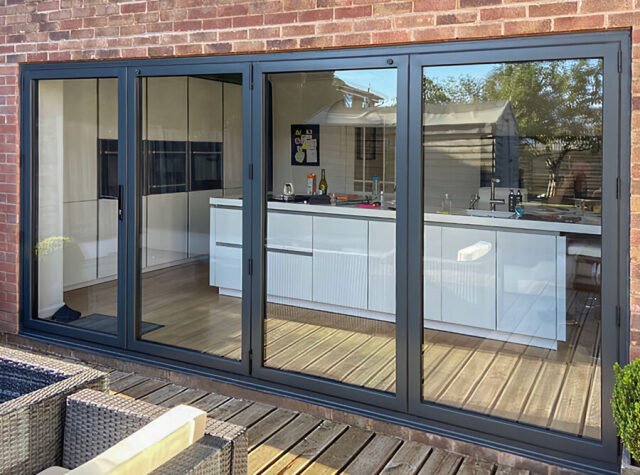
Visofold Aluminium Bifold Doors
Thermally broken aluminium bifolds that fold an entire wall away, fabricated in Pyle on the Smart Visofold system.
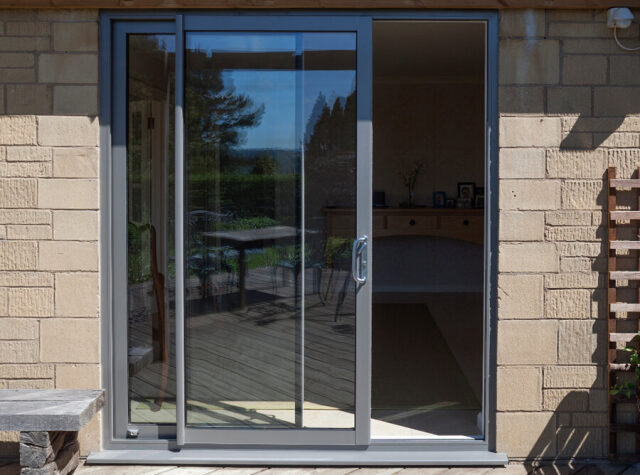
Visoglide Aluminium Sliding Doors
Slimline aluminium sliding doors with an 83 mm interlock, panels to 250 kg, and a view that stays open when the door is shut.
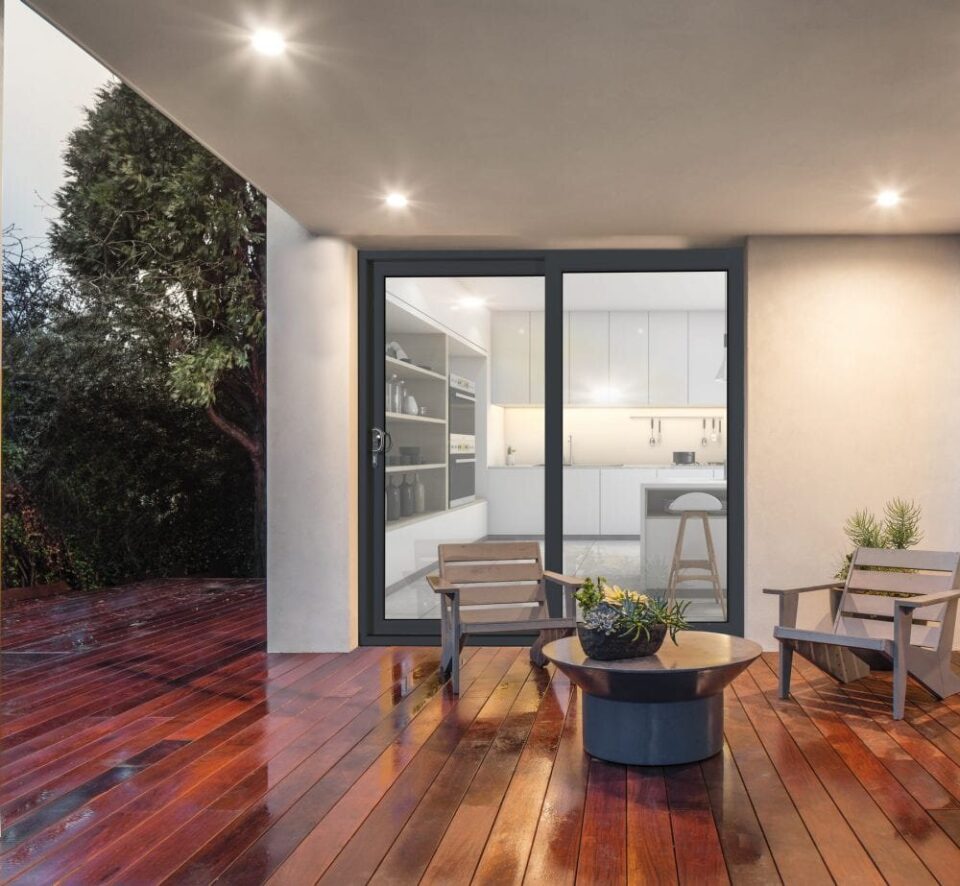
VEKA Imagine PVCu Sliding Patio Doors
Inline sliding patio doors that open a wall to the garden without giving up floor space.
Get a configuration drawn
Tell us the opening size and we will draw the panel arrangement on a written quotation.